
Custom Curtains Perth: How to Choose the Right Style, Fabric and Finish
Choosing curtains is easier when you begin with the room, not a swatch. This practical guide explains how sheer, blockout and layered curtains work, what headings and linings change, and which details to confirm before your curtains are measured and installed.
Curtains | Updated 15 September 2026 | Approx. 9 minute read
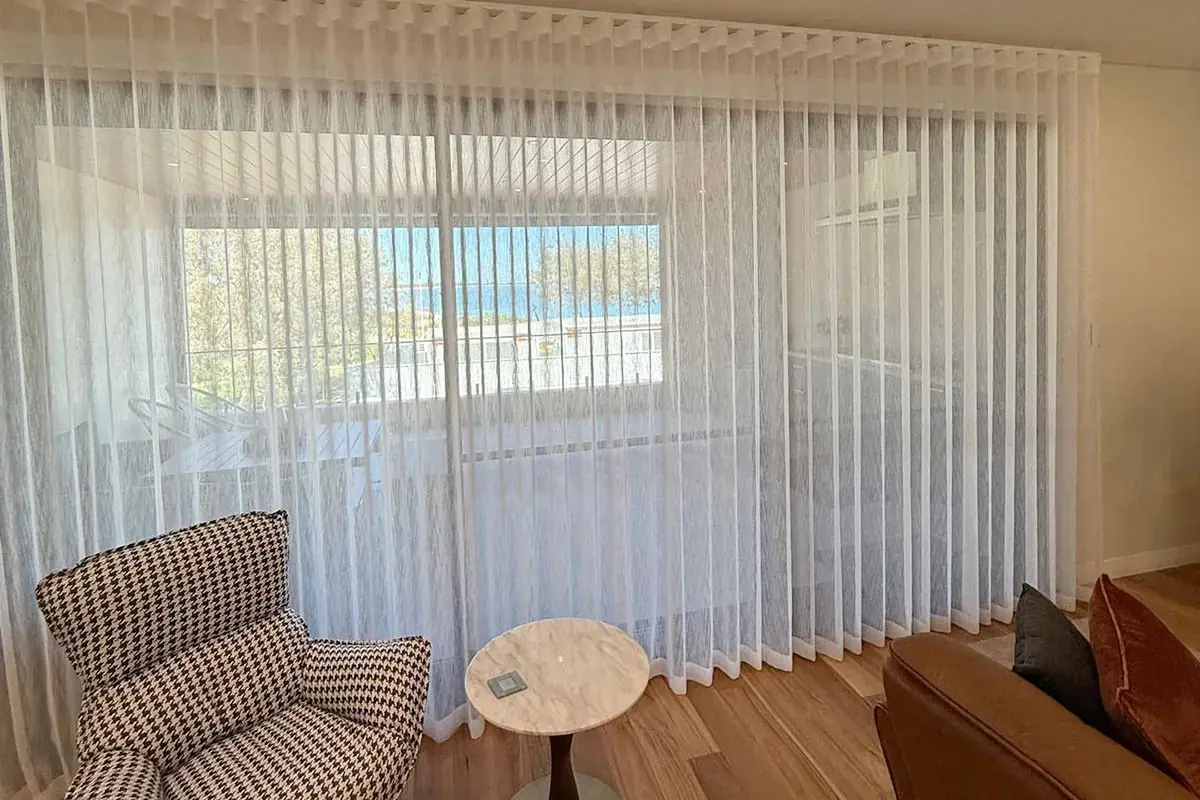

Why Custom Curtains Can Suit a Perth Home
Ready-made curtains are produced in standard widths and drops. Custom curtains are planned around the actual opening, the desired fullness, the available wall space and the way you want the treatment to operate.
That flexibility is useful for wide windows, sliding doors, tall ceilings and rooms where privacy or glare changes during the day. It also helps coordinate the fabric, heading, lining, track and finished length as one design.
Custom does not mean one particular look. The result can be relaxed and soft, crisp and architectural, light-filtering, privacy focused or layered for different times of day.
In this guide:
Sheer, Blockout or Layered Curtains?
Think about what needs to happen in the room during daylight hours and after dark. The answer will usually point toward one of these three arrangements.
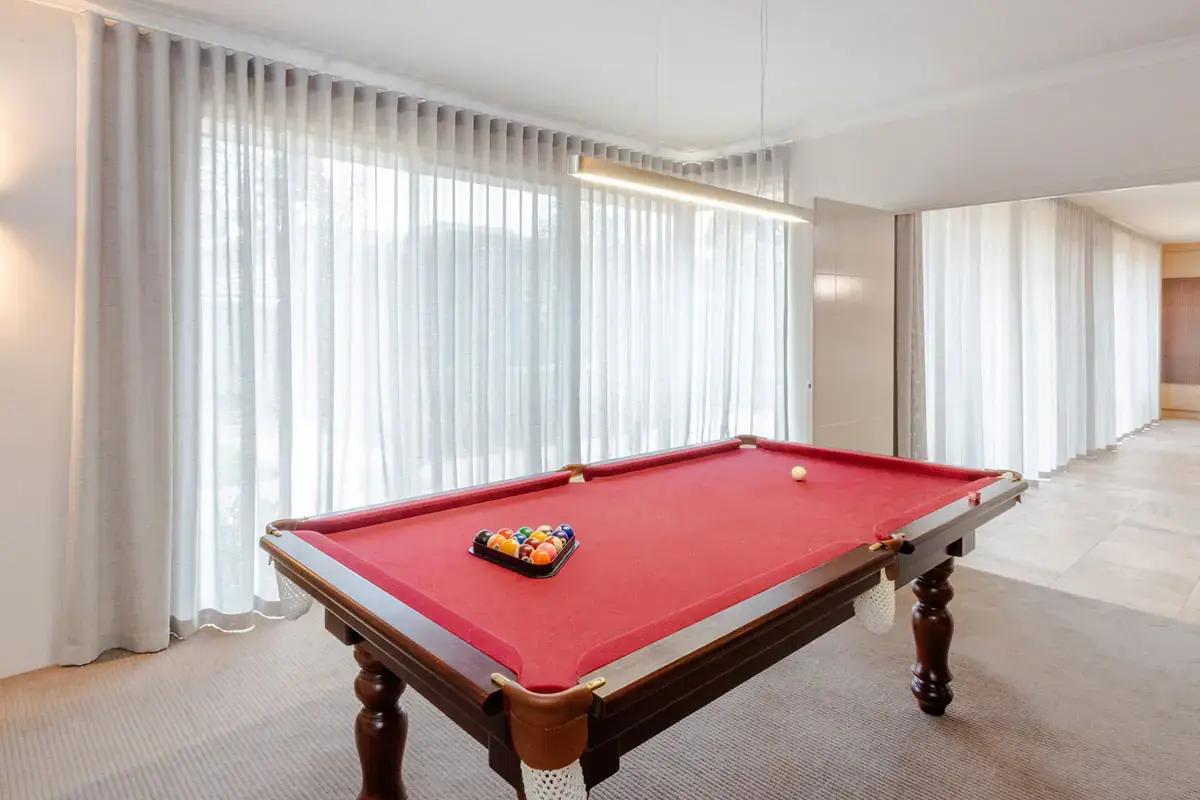
Sheer Curtains
Sheers diffuse strong daylight, soften a view and add movement without making a room feel visually heavy. Their transparency changes with the fabric and lighting conditions.
A sheer may screen the interior during the day, but it should not be treated as reliable night-time privacy when lights are on inside.
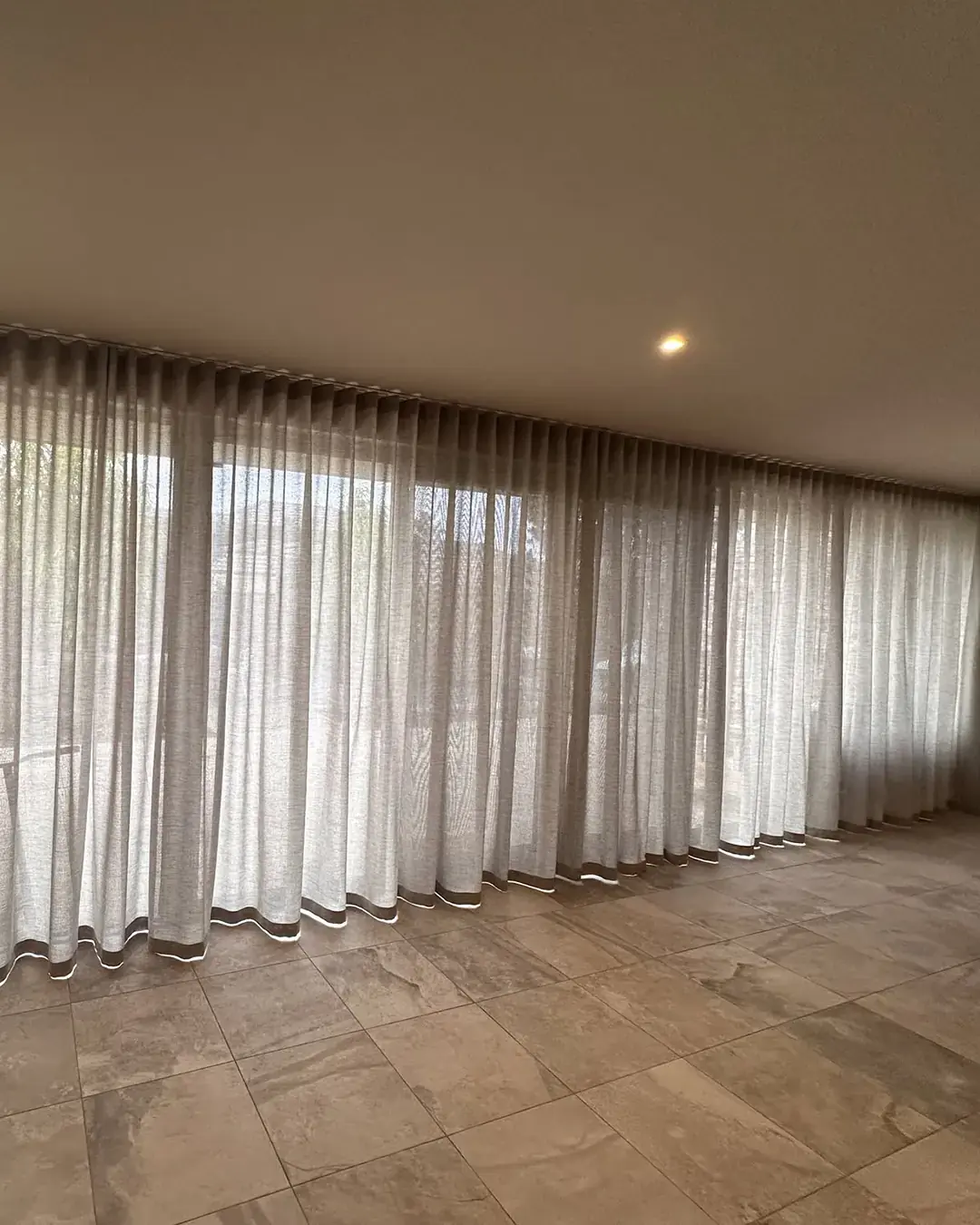
Blockout Curtains
Blockout fabric or a suitable lining is chosen when stronger privacy and light reduction are important, particularly in bedrooms and media rooms.
Fabric performance is only part of the result. Track position, overlap, width, floor clearance and light entering around the edges also matter.

Layered Curtains
A layered design combines a sheer curtain with a separate privacy or blockout layer. During the day, the sheer can filter light. The second layer can then close when stronger privacy or light control is needed.
Allow enough space for both tracks and for the fabric to stack clear of doors, handles and furniture.
Important: “Blockout” describes the fabric or lining performance. It does not guarantee complete darkness in the finished room because light can still enter around the installation.
Choose a Heading That Suits the Interior
The heading controls how the curtain folds, how formal it feels and which track or rod it needs. Ask to see each heading with a fabric of similar weight, because the same heading can look different in a soft sheer and a heavier lined curtain.
Wave Heading
Creates an even rhythm of soft folds on a compatible track. It suits many contemporary interiors and needs sufficient stack-back space when open.
Pinch Pleat
Uses sewn pleats for a tailored, structured finish. Double and triple pleat variations change the fullness and visual weight.
Inverted or Box Pleat
Forms folds behind or within the face of the curtain for a clean, architectural appearance. Suitability depends on the fabric and operating method.
Pencil Pleat or Gathered
Produces a softer gathered finish with an informal character. The density of the gathers depends on the selected fullness and fabric.
How to Choose Fabric, Lining and Finish
Begin with light and privacy. Hold the fabric against natural light and view it from both sides. Colour, weave and transparency can look very different at a window than under showroom lighting.
Then consider drape and durability. A lightweight fabric usually falls differently from a dense textile. Ask about composition, care instructions, colourfastness, suitability near strong sun and any product-specific warranty.
Decide whether a lining is needed. A separate lining may add body, improve privacy or increase light reduction. The exact result depends on the selected products and the coverage of the opening.
Finish the specification:
- Heading style and required fullness
- Track or rod type, colour and mounting position
- Single or double track for layered curtains
- Finished length, including whether the fabric clears, kisses or pools on the floor
- Stack-back space beside the glass or doorway
- Manual operation and any currently available alternative operating options
- Care instructions, lead time and written warranty terms
Do not rely on a small swatch alone. Larger samples and room lighting provide a more useful indication of colour, texture and transparency.
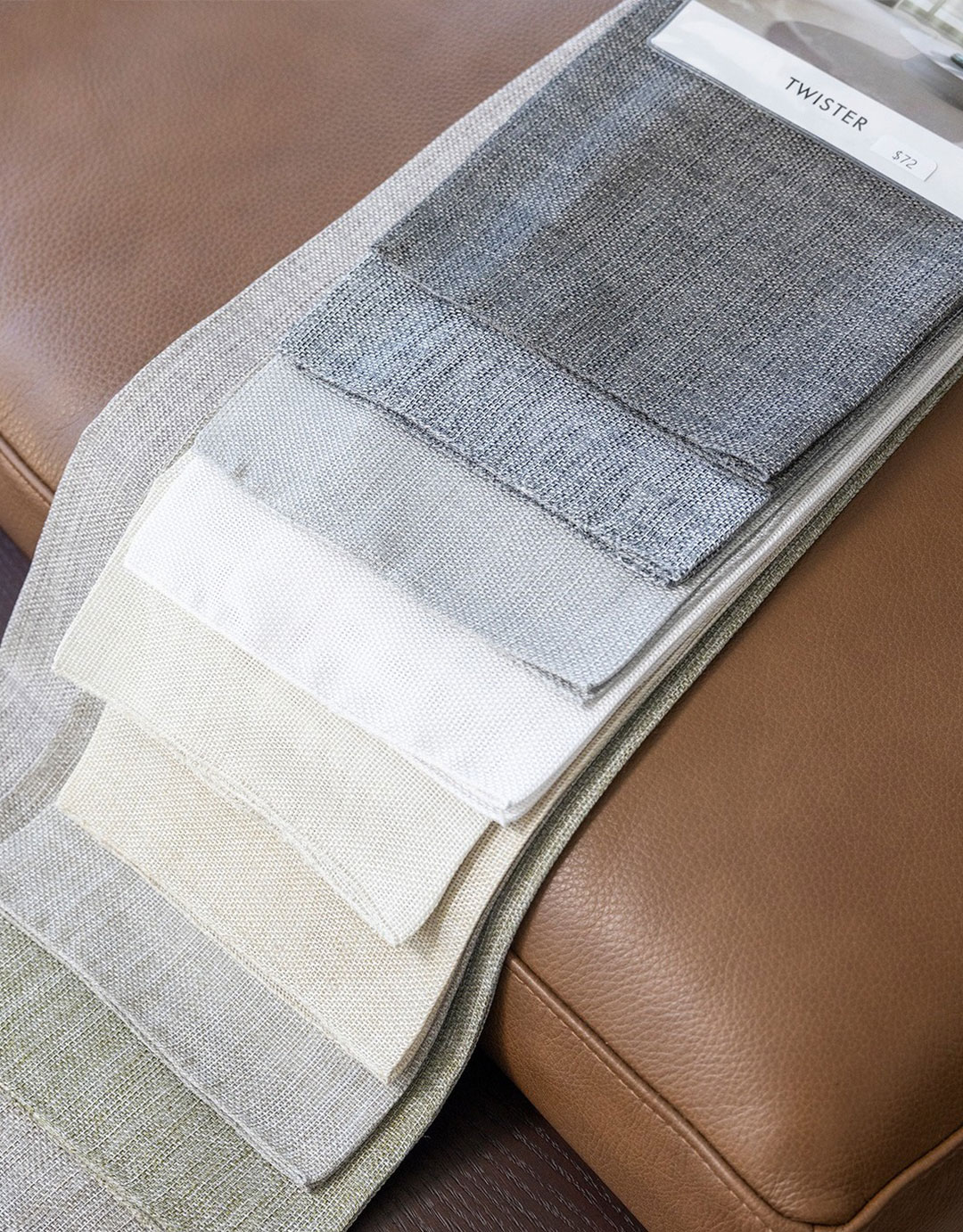
Curtain Choices by Room
A coordinated home does not require the same curtain in every room. Keep the overall palette consistent, then adjust privacy, light control and operation to suit each space.
Living Areas
Balance daylight, privacy, glare, views and furniture placement. On wide openings, check how much glass will remain covered when the curtains are open.
Bedrooms
Prioritise night-time privacy and the level of morning light reduction required. A layered treatment can provide a softer daytime setting and a separate blockout layer.
Sliding Doors
Plan the opening direction, stack-back, access to handles and how frequently people move through the doorway. The track layout should support normal use.
Children’s Rooms
Discuss light control, secure installation and safe control placement. Keep furniture and climbable items away from operating components.
Media Rooms
Choose stronger light reduction where screen reflections are a concern, while recognising that fabric, track position and perimeter gaps determine the finished result.
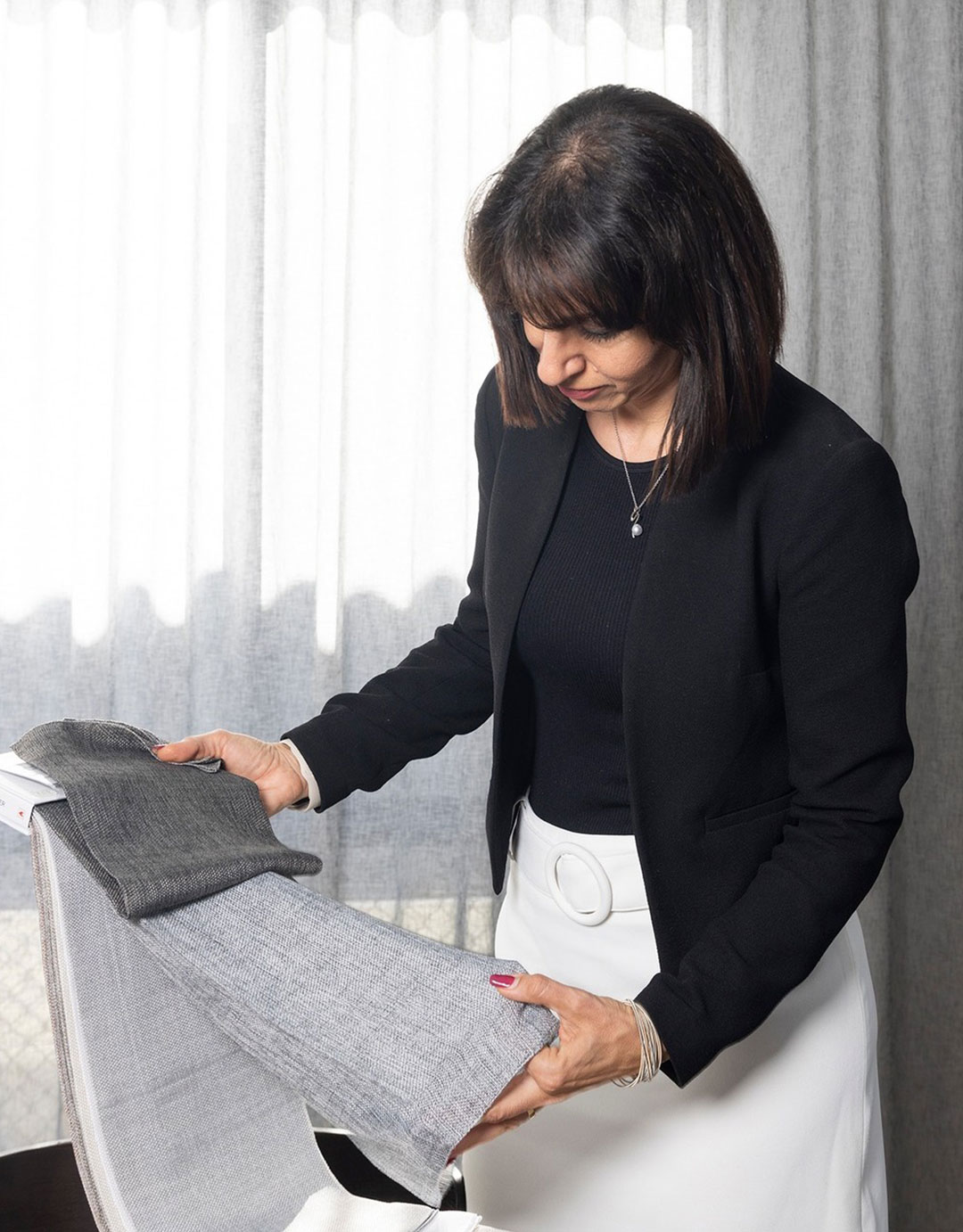
See Samples in the Light of Your Home
Screen colours are not a dependable guide to real fabric. Compare current samples in person, then view shortlisted colours against the wall, flooring, furniture and daylight in the room.
If privacy matters, check the material from both inside and outside at the relevant time of day. For layered curtains, compare the sheer and blockout fabrics together rather than as separate choices.
You can also photograph the room and bring approximate measurements to the first conversation. Final dimensions should still be taken for the confirmed project before ordering.
From Curtain Ideas to Installation
Lead times vary with the selected fabric, hardware and project scope. A clear written specification helps keep the important decisions visible from the first measure to installation.
Define the Brief
List the rooms, installation suburb, privacy needs, light concerns, preferred appearance and any doors or furniture that affect operation.
Measure the Openings
Check width, height, mounting surfaces, floor levels, handles, obstructions and the space required for tracks and curtain stack-back.
Review Samples
Compare the shortlisted fabric, lining, heading and hardware together. Confirm the appearance in the room’s daylight where practical.
Approve the Written Quote
Check quantities, fabric details, headings, tracks, operating method, installation scope, price, estimated timing and warranty terms before approval.
Production or Ordering
The curtains and hardware are prepared or ordered according to the approved measurements and written scope.
Install and Inspect
After installation, operate each curtain, check the finished drop and folds, and ask any care or adjustment questions before the project is signed off.
Use Real Projects to Refine Your Preferences
Project photographs are most useful when you look beyond colour. Notice the curtain height, track position, fullness, stack-back and how the treatment relates to the furniture and opening.
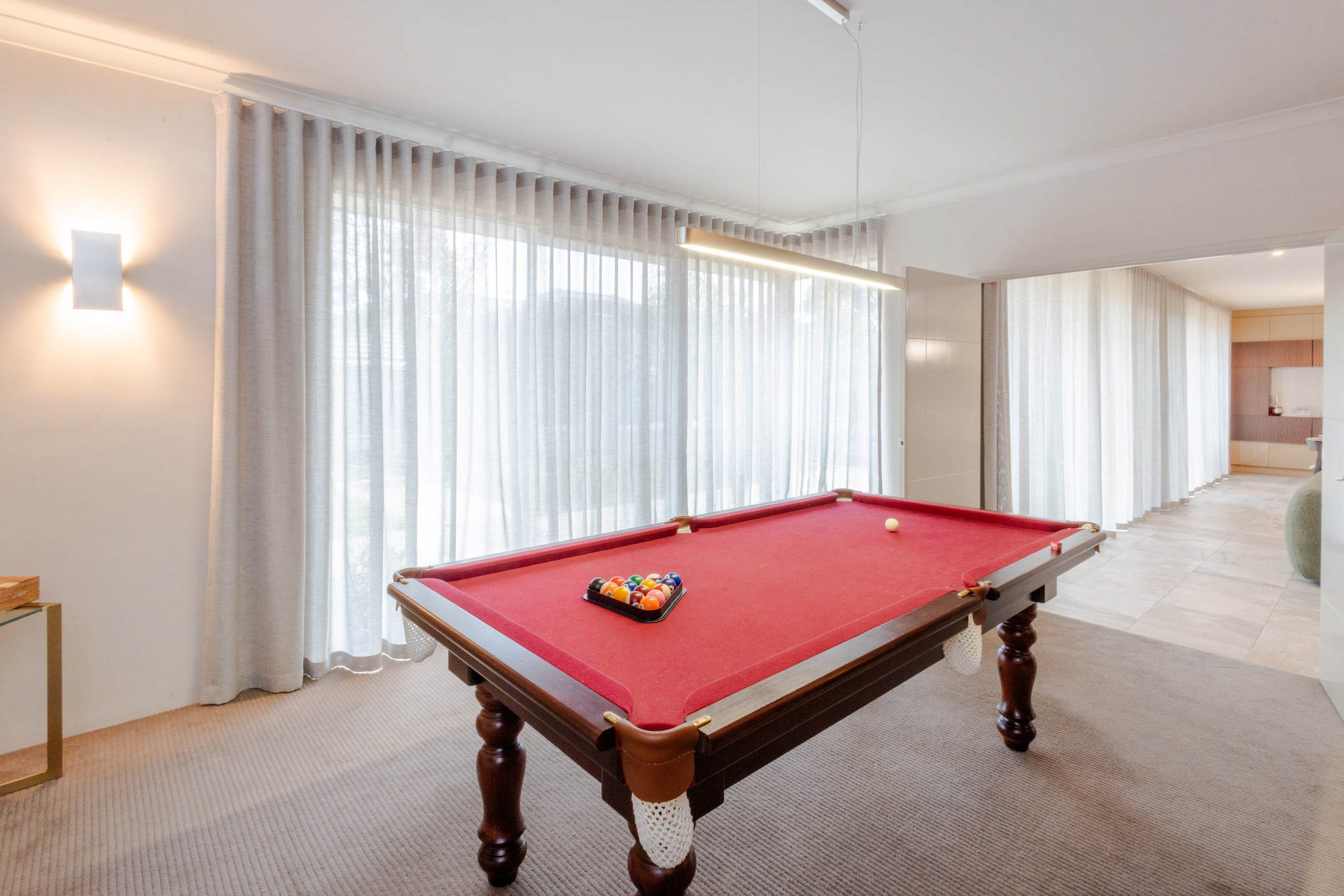
Layered Sheer and Blockout
Look at how the two tracks sit together, how much fabric gathers at each side and the difference between filtered daylight and the closed privacy layer.

Wide Windows and Doors
Check track spans, curtain divisions and the space needed to uncover the main access point when the treatment is open.
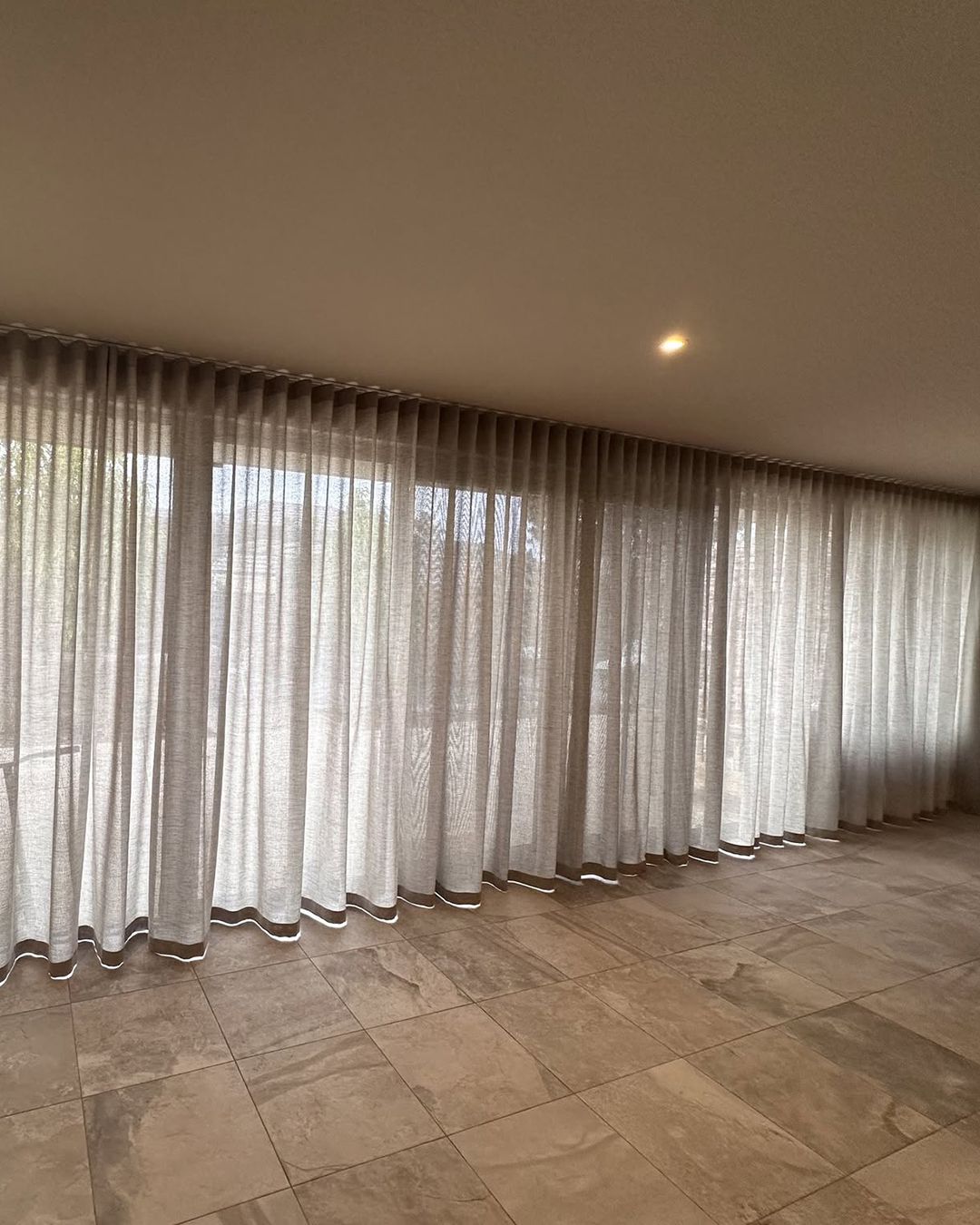
Bedroom Curtains
Compare the visual softness of the fabric with the practical need for privacy and morning light reduction.
Read Current Customer Reviews
When comparing curtain providers, look for recent feedback about communication, product guidance, measuring, installation and how issues were handled. Zara’s reviews page brings current customer feedback together in one place.
Related Curtain Planning Resources
Use these pages to compare the full curtain service, browse completed projects and consider one related window-treatment category.
Custom Curtains
Review Zara’s custom curtain service, including sheer, blockout and layered options, headings, fabrics and the measure-to-install process.
Curtain Gallery
See completed rooms for ideas about scale, layering, colour and how different curtain treatments sit around windows and doors.
Blinds and Shutters
Compare one related category if you need a compact treatment, adjustable light control or a more structured finish.
Frequently Asked Questions
These general answers are a starting point. Confirm the specifications, availability, timing and warranty for the products included in your written quote.
Are custom curtains worth considering for standard windows?
They can be. Custom curtains allow the width, drop, fullness, heading, track and lining to be planned together, even when the opening is a standard size. Whether that added flexibility is valuable depends on your priorities and budget.
Should I choose sheer or blockout curtains?
Choose according to when privacy and light control are needed. Sheers soften daylight but may not provide evening privacy. Blockout fabric or lining supports stronger privacy and light reduction. A layered arrangement can provide both functions at different times.
Do blockout curtains make a bedroom completely dark?
Not necessarily. Blockout material can substantially reduce light, but track placement, overlaps and gaps around the edges affect the finished room. Discuss the desired outcome before measurements and product selection.
Which curtain heading is best?
There is no single best heading. Wave headings create regular flowing folds, pinch pleats look more tailored, inverted pleats feel architectural and gathered headings are softer. The best choice depends on the interior, fabric, fullness, track and operating method.
How much fabric fullness do curtains need?
Fullness depends on the heading system, fabric and intended look. Too little may appear flat, while excessive fullness may feel heavy or require more stack-back space. It should be specified with the heading rather than guessed independently.
Should curtains touch the floor?
Many floor-length curtains are designed to clear the floor slightly, meet it closely or intentionally pool. The practical choice depends on appearance, cleaning, floor level, doors, children, pets and how frequently the curtain is operated.
Can curtains help with heat or cold?
A well-covered window treatment may influence comfort, but results vary with the fabric, lining, installation, glazing, building orientation and gaps. Ask for product-specific information and avoid treating curtains as a substitute for broader building insulation.
How long do custom curtains take?
Timing varies with fabric and hardware availability, the project scope and the current production schedule. Confirm an estimated lead time after the selections, measurements and written quote are complete.
What should I prepare for a curtain consultation?
Bring room photographs, the installation suburb, approximate opening sizes, colour references and notes about privacy, light, access and preferred style. Final measurements should still be taken for the approved project before ordering.
Plan Custom Curtains Around Your Home
Explore Zara’s curtain service or request a free measure and quote to discuss the rooms, light, privacy and finish you have in mind.